


Every believer experiences moments of hardship, uncertainty, disappointment, and emotional pain. Whether it is a delay in marriage, financial difficulties, health problems, family conflicts, or personal loss, life is full of tests. During such times, Islam teaches one of the greatest qualities a Muslim can possess—Sabr (Patience).
Sabr is far more than simply waiting for difficult times to pass. In Islam, patience means remaining steadfast upon faith, controlling one's emotions, avoiding sinful reactions, continuing righteous deeds, and placing complete trust in Allah's wisdom. A patient believer understands that every trial has a purpose and that Allah never burdens a soul beyond its capacity.
The Holy Quran repeatedly praises those who remain patient during hardship. Allah promises His mercy, guidance, and immense rewards for believers who face life's challenges with faith instead of despair.
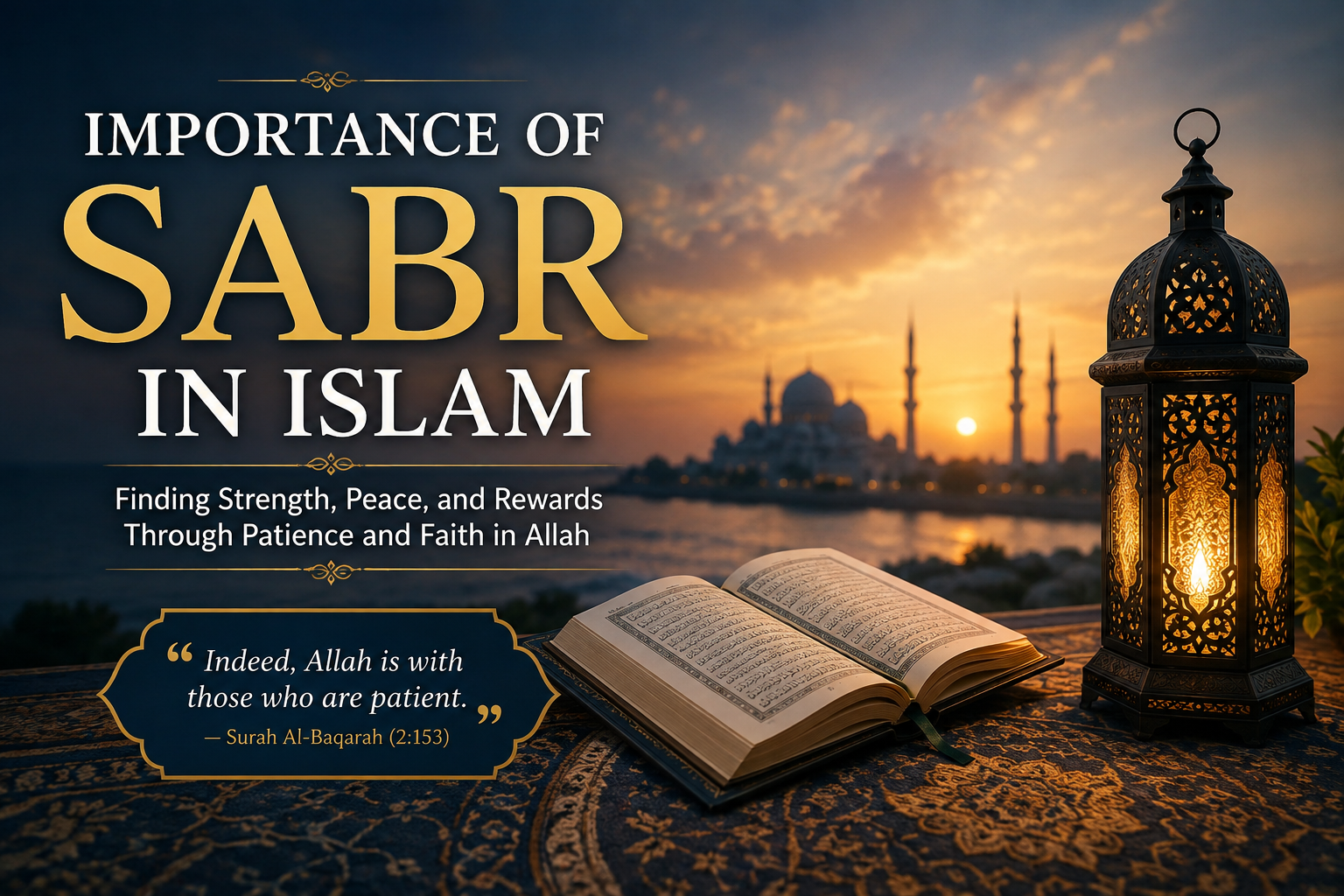
"Indeed, Allah is with those who are patient."
— Surah Al-Baqarah (2:153)What is Sabr in Islam?
The Arabic word Sabr means patience, perseverance, endurance, self-control, and steadfastness. It is one of the most beloved qualities in Islam because it reflects complete trust in Allah during both easy and difficult times.
Sabr does not mean remaining silent in the face of injustice or refusing to seek solutions. Rather, it means facing every challenge with wisdom, dignity, hope, and reliance upon Allah while continuing to make lawful efforts.
A believer practices Sabr by controlling anger, avoiding sinful behavior, speaking kindly, making sincere Dua, performing Salah regularly, and trusting that Allah's plan is always better than human expectations.
Why is Sabr So Important?
Every human being experiences tests throughout life. Some people are tested through poverty while others through wealth. Some are tested through illness, relationships, loneliness, delays in marriage, family problems, or emotional pain.
Allah mentions in the Quran that believers will certainly be tested. These trials are opportunities for spiritual growth, purification of sins, and strengthening faith.
When Muslims respond with patience instead of anger or hopelessness, they demonstrate sincere belief that Allah knows what is best for them.
Three Types of Sabr
Patience in Obeying Allah
Remaining consistent in daily Salah, fasting, Quran recitation, charity, and other acts of worship requires dedication and perseverance.
A believer continues obeying Allah whether life is easy or difficult.
Patience in Avoiding Sin
Every Muslim faces temptations. Practicing self-control by staying away from forbidden actions is one of the greatest forms of Sabr.
Choosing honesty over dishonesty, forgiveness over revenge, and modesty over temptation are beautiful examples of patience for the sake of Allah.
Patience During Hardship
Illness, financial struggles, loss of loved ones, delays in marriage, or personal disappointments are among the many tests people experience.
Islam encourages believers to remain hopeful, continue making Dua, and trust Allah without falling into despair.
Rewards of Sabr According to the Quran
Allah has promised tremendous rewards for those who remain patient. Unlike worldly rewards, the blessings of Sabr continue both in this life and the Hereafter.
- Allah is with those who are patient.
- Patient believers receive Allah's mercy.
- Sabr increases inner peace and emotional strength.
- Patience helps believers remain firm during trials.
- Allah grants immense rewards beyond human imagination.
- Sins may be forgiven through patiently enduring hardships.
Every difficulty becomes easier when the heart is filled with trust in Allah and the strength of Sabr.
How Sabr Changes a Believer's Life
Patience transforms the way Muslims deal with life's challenges. Instead of reacting with panic, anger, or hopelessness, believers learn to pause, remember Allah, seek His guidance, and continue making positive efforts.
A patient heart experiences greater peace because it understands that every event happens by Allah's permission and contains wisdom, even when that wisdom is not immediately visible.
How to Develop Sabr in Daily Life
Patience is not something that appears overnight. Like every good quality, Sabr grows stronger through regular worship, self-discipline, and sincere reliance upon Allah. Every challenge in life is an opportunity to strengthen faith and become spiritually mature.
Muslims can develop patience by remembering Allah frequently, performing Salah on time, making sincere Dua, reading the Holy Quran, and surrounding themselves with righteous people who encourage good character.
Pray Your Five Daily Salah
Salah strengthens the connection between a believer and Allah. It reminds us that every difficulty is temporary while Allah's mercy is everlasting.
Make Sincere Dua Every Day
Speak to Allah with honesty and humility. Ask Him to increase your patience, strengthen your faith, and guide you through every hardship.
Remember Allah Through Dhikr
Regular remembrance of Allah brings comfort to the heart and reduces anxiety during difficult situations.
Continue Making Positive Efforts
Islam teaches believers to trust Allah while also taking lawful steps toward solving their problems. Patience is never an excuse for giving up.
Sabr in Marriage and Relationships
Relationships often require understanding, forgiveness, and patience. Differences in personalities, misunderstandings, financial stress, or delays in marriage can become difficult tests.
Islam encourages believers to communicate respectfully, forgive each other, and seek Allah's guidance before making emotional decisions. Patience helps protect relationships from unnecessary anger and regret.
Common Mistakes People Make
During difficult times, people sometimes react emotionally instead of relying upon Allah. These reactions may increase stress rather than bringing peace.
- Complaining constantly without making Dua.
- Giving up hope too quickly.
- Comparing their lives with others.
- Ignoring Salah during difficult times.
- Expecting immediate solutions.
- Depending completely on people instead of Allah.
- Becoming angry with Allah's decree.
Patience does not remove every difficulty, but it gives believers the strength to face every difficulty with faith and hope.
A Beautiful Dua for Patience
Muslims are encouraged to ask Allah for patience and steadfastness. One of the well-known supplications mentioned in the Quran is:
رَبَّنَا أَفْرِغْ عَلَيْنَا صَبْرًا وَثَبِّتْ أَقْدَامَنَا
Translation: "Our Lord, pour upon us patience and make our steps firm."
— Surah Al-Baqarah (2:250)Trust Allah's Perfect Plan
Sometimes Allah answers our prayers immediately. Sometimes He delays the answer because He knows what is best. At other times, He replaces what we ask for with something better than we could have imagined.
A believer who practices Sabr understands that every moment of waiting is an opportunity to grow closer to Allah.
Conclusion
Sabr is one of the greatest qualities a Muslim can develop. It strengthens faith, increases emotional resilience, and reminds believers that Allah is always with those who remain patient and steadfast.
Whether you are facing challenges in marriage, family life, health, finances, or personal struggles, remember that every hardship carries wisdom known only to Allah.
Continue praying, making sincere Dua, performing your daily Salah, and placing complete trust in Allah's mercy. Through patience and faith, every believer can find hope, strength, and peace even during life's greatest tests.